Sponsored article
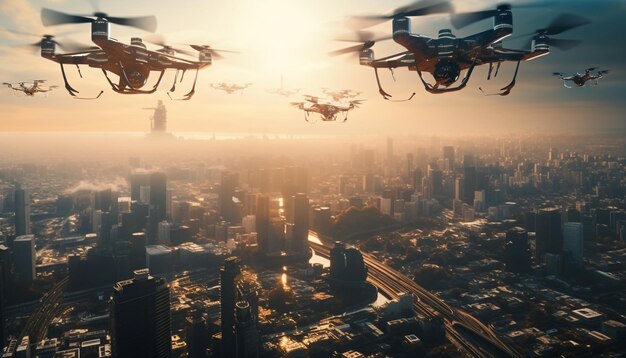
In an era of rapid technological progress, advanced drone systems are set to revolutionize remote monitoring and surveillance, offering unprecedented capabilities and efficiencies. By integrating cutting-edge technologies such as high-resolution imaging and autonomous flight systems, drones are transforming how we observe and analyze environments. This revolution is not just changing the landscape of surveillance but is also creating new possibilities for safety, cost-effectiveness, and operational excellence across various sectors.
Over the years, drone technology advancements have significantly transformed the landscape of remote monitoring and surveillance. Initially, drones were primarily used for military applications, but technological progress has broadened their scope to encompass various civilian uses, such as border control, public safety, and environmental monitoring. One of the critical improvements has been the integration of high-resolution cameras, which provide unprecedented clarity and detail, allowing operators to identify and assess situations with precision. Furthermore, autonomous flight systems have emerged, enabling drones to carry out pre-programmed missions with minimal human intervention, thereby enhancing operational efficiency and reducing the risk of human error.
As these technologies continue to evolve, the capabilities of drones in surveillance applications have multiplied. Modern drones now offer high stability in varied weather conditions, ensuring consistent performance in critical missions. Additionally, the development of versatile long-range UAV drones like the MADDOS system further expands operational reach, providing persistent surveillance over vast areas. These innovations have not only enhanced the effectiveness of remote monitoring and surveillance tasks but also allowed for rapid response in emergencies and unforeseen situations. Discover more about these versatile long-range UAV drones here.
As technology continues to evolve, drones in remote areas have emerged as a transformative tool for surveillance and monitoring. These advanced drone systems are uniquely capable of reaching locations that might otherwise be inaccessible or hazardous for humans, enhancing the overall monitoring efficiency in diverse terrains and environments. Whether navigating dense forests, mountainous regions, or isolated islands, drones offer unmatched versatility and flexibility. Moreover, they excel at real-time data collection, capturing high-resolution images and videos that inform critical decisions promptly. This immediacy and precision of data collection make drones an indispensable ally in tasks ranging from wildlife tracking to resource management and disaster response.
In addition to their tactical advantages, drones present a remarkably cost-effective surveillance solution. Traditional methods of monitoring often involve substantial overheads, including personnel, transportation, and equipment maintenance, which drones can significantly reduce. By minimizing these costs, they allow for more frequent and comprehensive monitoring without compromising quality. Furthermore, drones can be equipped with an array of sensors and cameras, enabling them to monitor environmental conditions and infrastructure integrity, thereby providing invaluable insights into both natural and man-made environments. This positions drones as an ideal solution for modern remote monitoring and surveillance needs, maximizing outcomes while streamlining budgets.
Advanced drone systems have transformed industry applications by offering innovative solutions for remote monitoring and surveillance, enabling precision, efficiency, and safety. In agriculture, drones equipped with sensors and cameras facilitate agriculture surveillance, allowing farmers to monitor crop health, optimize water usage, and detect pest infestations in real-time. In infrastructure, advanced drones are crucial for infrastructure inspection, providing detailed assessments of bridges, roads, and buildings without human intervention, minimizing risk and operational downtime.
Moreover, in wildlife conservation, drones play a pivotal role in wildlife monitoring. They can track animal movements, observe endangered species, and ensure habitat protection with minimal disturbance to the natural environment. In security operations, drones enhance surveillance by providing aerial views, tracking unauthorized entries, and responding to incidents swiftly. These diverse industry applications illustrate how advanced drone systems are revolutionizing remote monitoring and surveillance, leading to smarter and more informed decision-making processes.